Analog vs Digital Panel Meters: Cost and Accuracy
By Martin Douglas · Published · Updated · 5 min read
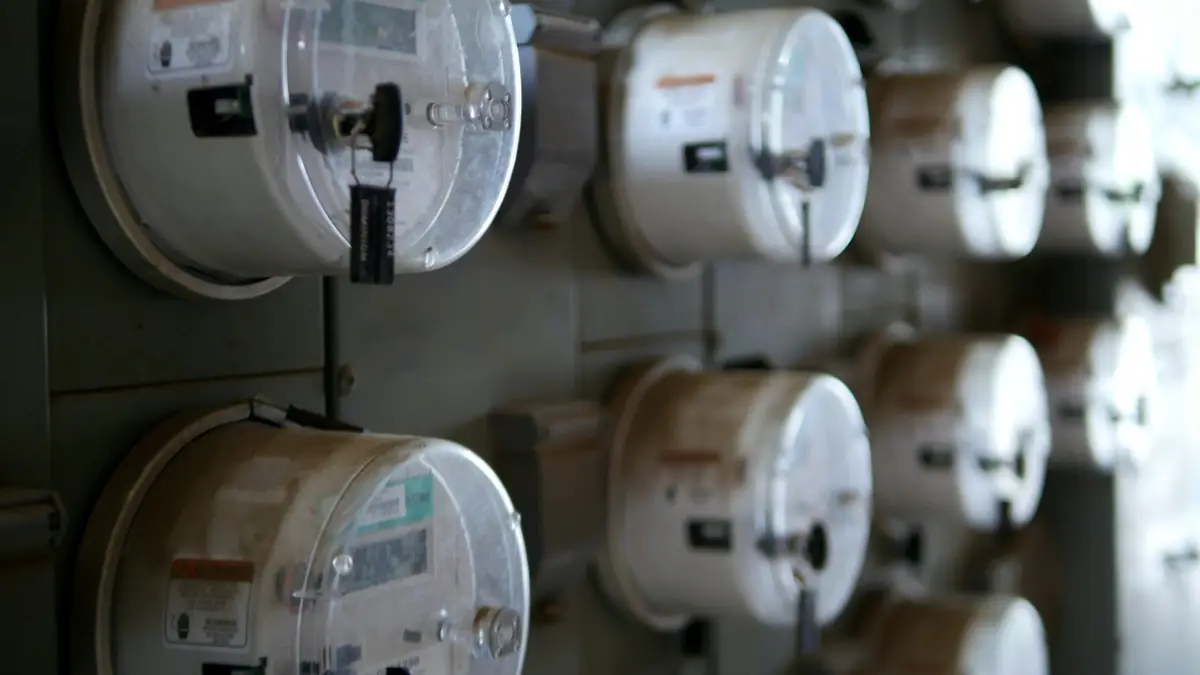
Panel meters are the cheapest part of most control panels and the part operators look at most. Choosing between a moving-coil analog movement and a digital unit changes the panel budget by a few dollars per indicator, but it also changes how quickly a fault is spotted, how the reading is logged, and how often the meter needs attention.
This comparison sticks to what you can measure on a bench: purchase price, stated accuracy, drift, reading speed, and how easily each type fits a modern panel with a PLC, a 4–20 mA loop, or a data logger. The right answer is rarely 'always digital' or 'always analog' — it depends on the signal, the environment, and who reads the dial.
Purchase Price and Total Cost of Ownership
Basic 72×72 mm analog panel meters with a moving-coil movement typically sell for roughly $15–60 depending on range, scale customisation, and bezel quality. Comparable digital panel meters start around $20–50 for a 3.5-digit unit with a 4–20 mA input, and climb to $80–200 for 4.5-digit true-RMS or process meters with relays and serial output. The gap at the entry level is small; where analog wins clearly is in high-vibration or high-temperature spots where a cheap digital display fails early.
Ownership costs diverge more than purchase prices. Analog movements have mechanical pivots and hairsprings that wear, and they should be checked against a reference every year or two. Digital meters have no moving parts but depend on stable internal references and on the health of the loop supply. If you are planning a fleet-wide replacement, it pays to model both purchase and recurring verification cost rather than comparing sticker prices alone; see how to budget instrument replacement cycles for a simple method.
- Entry analog meter: roughly $15–60
- Basic digital process meter: roughly $20–50
- 4.5-digit digital with relays or serial: $80–200
- Analog needs periodic mechanical verification
- Digital accuracy depends on reference and loop supply
Accuracy, Resolution, and Drift
A decent analog panel meter is specified at ±1% to ±2% of full scale, and a good one at ±0.5%. Because the error is a percentage of span, a 0–100 °C dial reading 80 °C can be off by 1–2 °C. Digital meters commonly quote ±0.1% of reading ±1 count, or ±0.05% on better process units, so a 4.5-digit meter reading 80.00 °C may be within 0.1 °C. For trending and recording, the digital advantage is large.
Drift behaves differently too. Analog movements shift with temperature, mounting angle, and mechanical shock, and the zero can creep by a needle width over a year, which is 0.5–1% of span on a typical 90° scale. Digital meters drift far less but can suffer from reference ageing in the tens of ppm per year and from noise pickup on long unshielded signal runs. Neither is immune; the failure modes just differ.
- Analog: ±0.5% to ±2% of full scale typical
- Digital: ±0.05% to ±0.1% of reading typical
- Analog zero creep: up to about 1% of span per year
- Digital reference ageing: tens of ppm per year
Readability, Speed, and Operator Behaviour
Analog needles excel at showing rate of change and direction of travel. An operator glancing at a panel sees whether a pointer is climbing toward a red mark faster than they can read three changing digits. That is why analog meters persist on pressure, level, and temperature panels where the trend matters more than the third decimal. The trade-off is resolution: a 90° arc over a 0–100 range gives roughly 1 unit per millimetre of scale, so fine differences are lost.
Digital meters win on exact values, unit switching, and alarming. A 4-digit display updates 2–5 times per second, which is readable but can blur during fast transients unless the meter has a peak-hold or averaging function. In bright sunlight or from an angle, LCD contrast falls off while a printed scale stays legible. Backlit and OLED displays close the gap but add cost and a finite display lifetime.
- Analog shows trend and direction at a glance
- Digital gives exact values and unit labels
- Analog resolution limited by scale length
- Digital updates typically 2–5 readings per second
- Use peak-hold on digital meters for fast signals
Panel Integration and Signal Compatibility
Most modern panels run 4–20 mA loops, and digital meters accept that directly with a low burden voltage, often under 2 V, so they drop into an existing loop with little disturbance. Analog meters usually need a shunt or a moving-coil movement matched to the signal; a 0–1 mA movement with a 250 Ω shunt works, but the loop must supply the extra burden. Watch total loop resistance when adding several indicators.
Digital meters also offer relay outputs, Modbus or serial links, and scaling in software, which makes them natural partners for a PLC or a small SCADA setup. Analog meters are purely local — no output, no configuration, no firmware. That simplicity is a strength in panels where no one will ever connect a laptop, and a limitation anywhere readings need to reach a historian. If the signal source itself is in question, the same selection logic applies as in a thermocouple vs RTD buyer's checklist.
- Digital: direct 4–20 mA input, burden often under 2 V
- Analog: needs matched movement or shunt
- Digital: relays, serial, software scaling
- Analog: local indication only, no output
- Check total loop resistance before adding meters
| Attribute | Analog moving-coil | Digital 3.5-digit | Digital 4.5-digit process |
|---|---|---|---|
| Purchase price | $15–60 | $20–50 | $80–200 |
| Accuracy | ±0.5% to ±2% of span | ±0.1% of reading ±1 count | ±0.05% of reading ±1 count |
| Resolution | About 1% of span | 0.1 unit on a 200-count scale | 0.01 unit on a 2000-count scale |
| Update rate | Effectively continuous | 2–5 per second | 2–10 per second |
| Signal input | Matched movement or shunt | 4–20 mA, 0–10 V | 4–20 mA, RTD, thermocouple |
| Outputs | None | Usually none | Relays, serial, Modbus |
| Vibration tolerance | Poor without damping | Good | Good |
Environment, Durability, and Service Life
Moving-coil meters dislike vibration and shock; a needle that oscillates on a pump skid will wear its pivot quickly. Specify liquid-filled or ruggedised movements, or move to digital, where vibration is continuous and above roughly 0.5 g. Analog meters also have a narrower comfortable temperature band, with accuracy often guaranteed only from 0 to 50 °C or similar, and they can fog internally in humid plants unless sealed to IP54 or better.
Digital meters handle vibration well but bring their own vulnerabilities: display polarisers degrade in strong UV, electrolytic capacitors in cheap power supplies dry out in hot cabinets, and firmware can lock up. In cabinets above about 50 °C internal temperature, derate the meter's rated ambient and choose units with wide-temperature displays. Service life for either type is typically 5–10 years in a well-ventilated panel.
- Analog: avoid sustained vibration above about 0.5 g
- Analog: accuracy often guaranteed 0–50 °C only
- Digital: check display temperature rating
- Keep cabinet internal temperature below 50 °C where possible
Calibration and Maintenance Practice
Both types need periodic verification, but the procedure differs. Analog meters are checked at several points across the scale and adjusted mechanically; a meter that fails usually needs re-ranging or replacement rather than repair. Digital meters are checked with a signal calibrator at zero, mid-scale, and full-scale, and many allow a software trim without opening the case. The time per point is similar, roughly 10–20 minutes per meter including documentation.
How often you verify depends on criticality and observed drift. A reasonable starting point is annual for custody or safety readings and every two to three years for indication-only panels. Cost per meter is modest, but it multiplies across a large panel; the drivers are set out in what instrument calibration actually costs.
- Verify at zero, mid-scale, and full-scale
- Analog faults often mean replacement
- Digital trim is usually done in software
- Annual for critical, 2–3 years for indication only
- Digital meters win on accuracy, resolution, and integration; expect ±0.05–0.1% of reading versus ±0.5–2% of span for analog.
- Analog pointers still communicate trend and rate of change faster, which matters on pressure, level, and temperature panels.
- Purchase price differences are small at entry level; total cost is driven by verification, drift, and service life.
- Match the meter to the loop: check burden voltage and total loop resistance before adding indicators.
Martin has spent years writing about measurement equipment and helping small workshops choose and maintain the right instruments. He focuses on practical buying advice, calibration routines, and clear explanations of specification sheets. His goal is to make instrument decisions easier for people without a metrology background.